Four volumes covering running mechanics, acceleration, maximum speed and agility, each with testing, technique, drills and ready-made sessions.
By Tom French, Lead Performance Coach at Sligo Rovers FC and former Head of Performance for the Galway Senior Hurlers.
Players do sprints at the end of training, when they’re tired. Ladder drills are chosen because they look busy. Athletes are told to “run faster” without anyone showing them how.
Speed is a skill. It can be tested, coached and improved, but only with the right technique, the right dose and the right timing in the week.
Mechanics → Acceleration → Maximum Speed → Agility
Each volume follows the same structure:
The science → Testing → Technique → Drill library → Programmes → Planning
Test your athletes, find what’s holding them back, coach the fix and follow a ready-made programme, all with a phone, cones and a tape measure.
Volume 1: Running Mechanics
How speed is made, and why good sprinters keep most of their leg action in front of the body. Includes:
a 10-point Running Technique Screen, scored on video
the technical model and a faults-and-fixes table
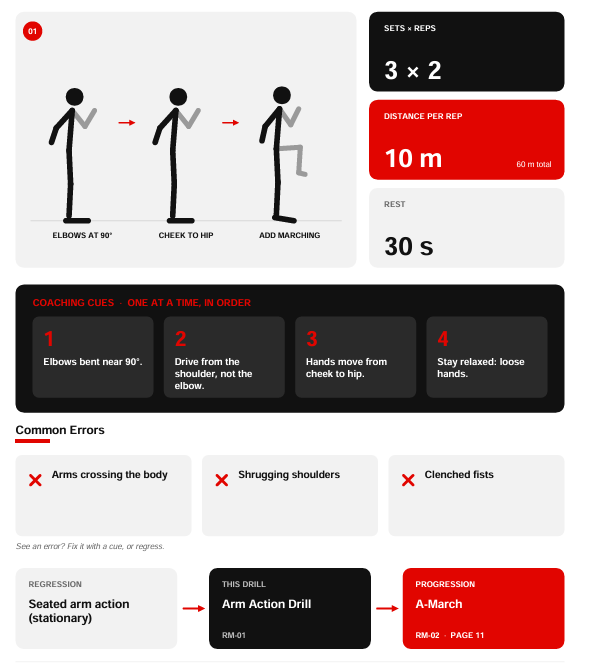
8 technique drills, from arm action to fast-leg drills
8 sessions across four levels
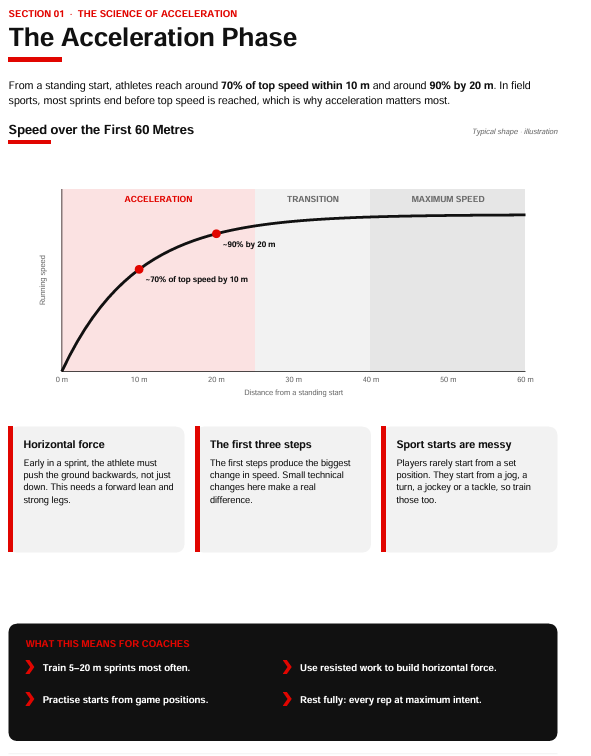
Volume 2: Acceleration
The first steps that win the race. Includes:
10 m and 20 m sprint testing with splits, plus a First-Step Screen
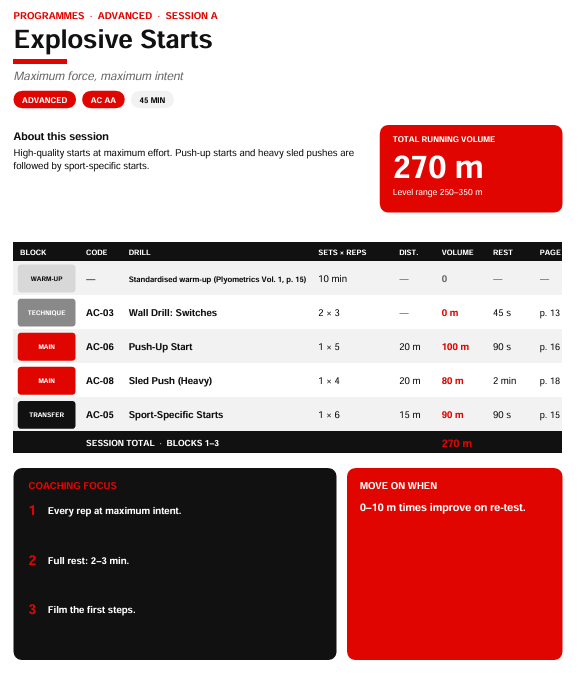
wall drills, falling starts, push-up starts, hill sprints and sled work
sport-specific starts from game positions
8 sessions across four levels
Volume 3: Maximum Speed
Upright sprinting and top-speed exposure. Includes:
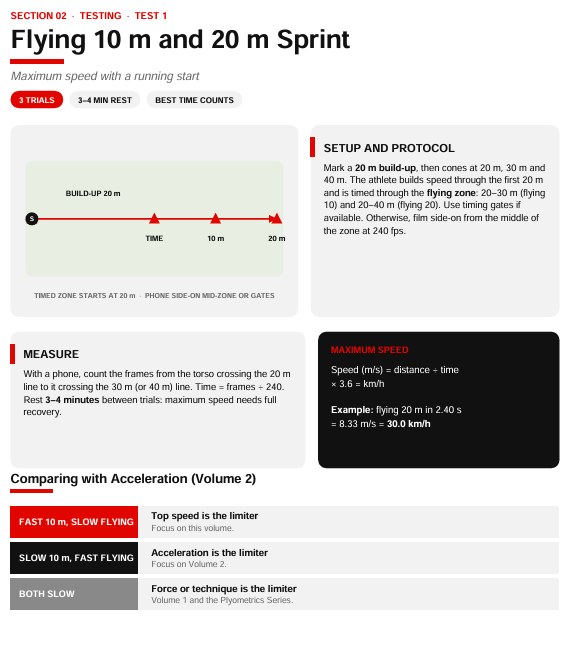
flying 10 m and 20 m tests
how to set speed zones from GPS or sprint times
wicket runs, in-and-outs, curved sprints and max-velocity work
8 sessions across four levels
Volume 4: Agility
Braking, cutting and reacting. Includes:
the 505 change-of-direction test, with left-right difference
a reactive agility test that measures decision speed
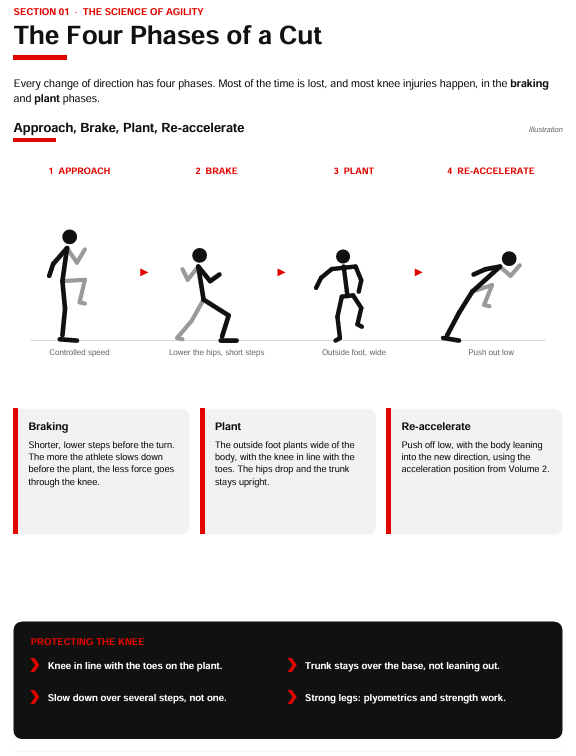
a deceleration model built to protect the knee
drills from mirror games to 1v1 evasion
8 sessions across four levels
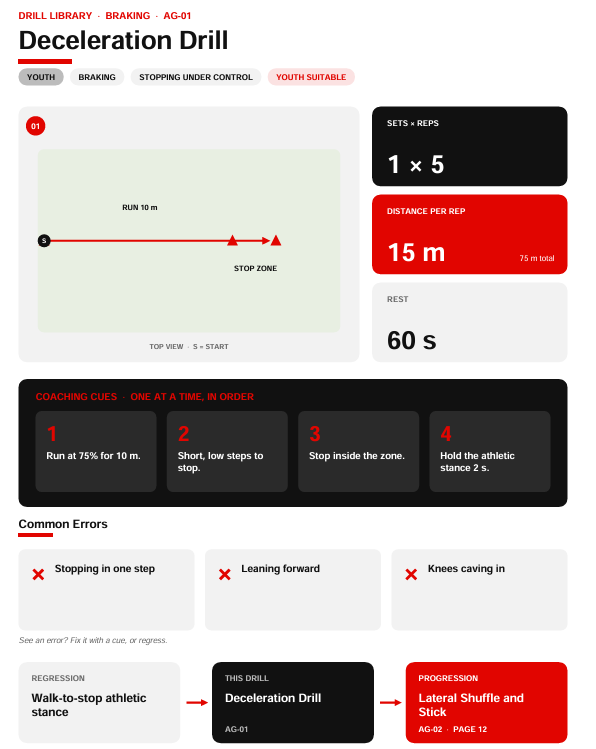
Every volume also includes printable results records, drill cards (each with diagrams, coaching cues, common errors, regressions and progressions) and a match-week planning page.
GAA, soccer and rugby coaches who want faster, sharper players
Strength and conditioning coaches who want a structured, testable speed system
Athletics coaches working on sprint technique
Club and academy coaches with youth players: dedicated youth sessions in every volume
Serious athletes who want a programme to follow
✔ Test first, then coach. Simple field tests with a phone show exactly what’s holding each athlete back.
✔ Technique you can see. Every volume has a labelled technical model and a faults table that links each fault to the drill that fixes it.
✔ Every metre counted. Each session is checked against a safe running-volume range for its level.
✔ Built for field sports. Game starts, curved runs, reactive cuts and 1v1 agility, not just straight-line sprinting.
✔ Youth-friendly. Every volume has youth sessions built on games, races and fun.
✔ Works with the Plyometrics Series. Same levels, same warm-up, same readiness screen, cross-referenced throughout.
Five volumes. 52 exercises. 24 ready-to-run sessions. Everything you need to build faster, more powerful and more robust athletes, from the first landing to the depth jump.
By Tom French, Lead Performance Coach at Sligo Rovers FC and former Head of Performance for the Galway Senior Hurlers.
Box jumps chosen because they look impressive. Depth jumps given to athletes who can’t land. Fifty contacts one week, two hundred the next. No testing, no progression, no plan around matches.
The result: athletes who don’t get more powerful, and too many sore knees and Achilles tendons along the way.
Plyometrics works, but only when it’s coached in the right order, at the right dose, for the right athlete.
Plyometrics: The Complete Series takes you through the whole process:
Understand it → Test it → Coach it → Programme it → Plan it
Every rule links up across the series. Every exercise has a code and a page number, and every session is counted to the contact. Every athlete has a clear route from Beginner to Advanced. You can open it on Monday and run it on Tuesday.
Volume 1: Foundations
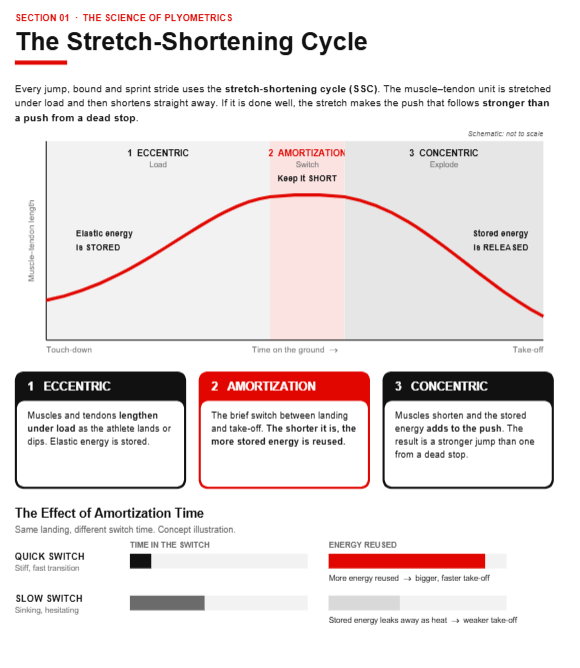
The science of the stretch-shortening cycle, explained simply. The six-stage landing progression every athlete must pass. Contact limits for every level and age group, plus surfaces, footwear, session structure, the standardised warm-up and the Pre-Session Readiness Screen.
Volume 2: Testing
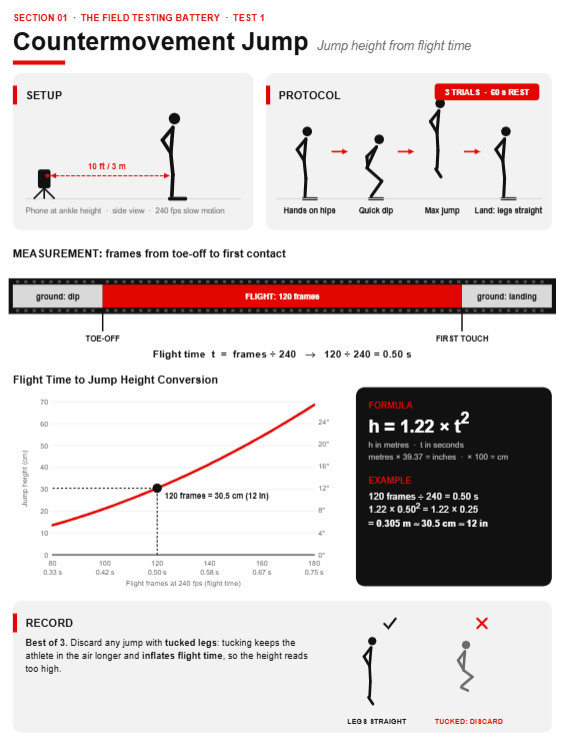
Four field tests you can run with just a phone and a tape measure: countermovement jump, 10/5 repeated hop (RSI), broad jump and single-leg hop. A step-by-step limiter profile tells you whether each athlete is held back by technique, strength or reactivity, and sends them to the right training route. Includes a printable team results sheet and a 60-minute team test-day plan.
Volume 3: Exercise Library
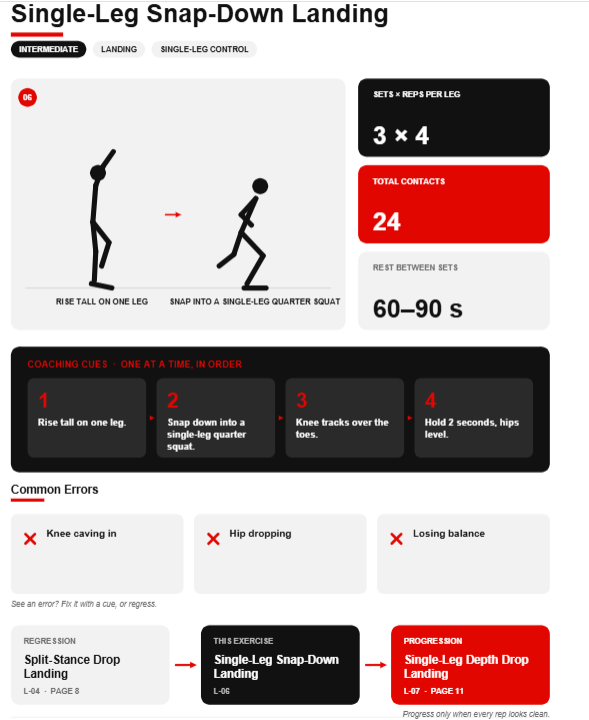
52 exercises across landing, jumping, horizontal, multidirectional, bounding, reactive and depth work. Each one has its own page with:
a movement diagram
sets, reps, total contacts and rest
four coaching cues
common errors
a regression and a progression, linked by page number
Volume 4: Programming
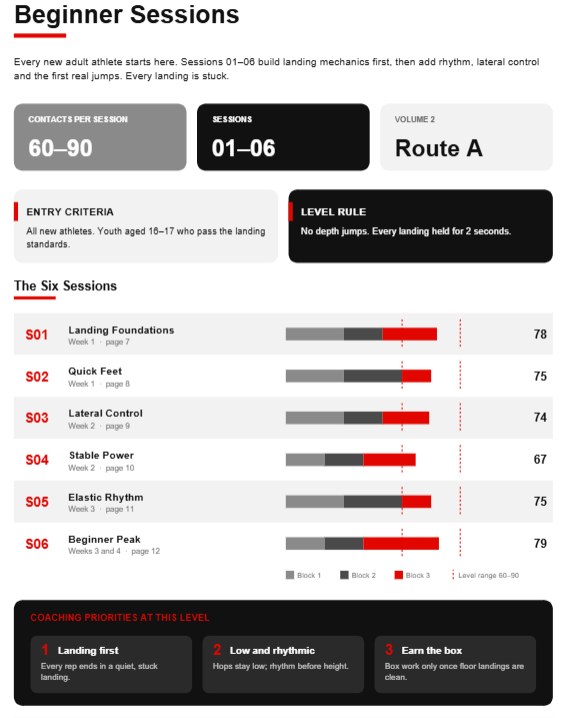
24 ready-made sessions across four levels: Beginner, Intermediate, Advanced and Youth. Each session lists every exercise, the dose and the total contacts, plus coaching focus points and a clear “move on when” rule. Includes four-week block plans and a printable session record.
Volume 5: Season Planning
How to fit plyometrics around real fixtures. It covers:
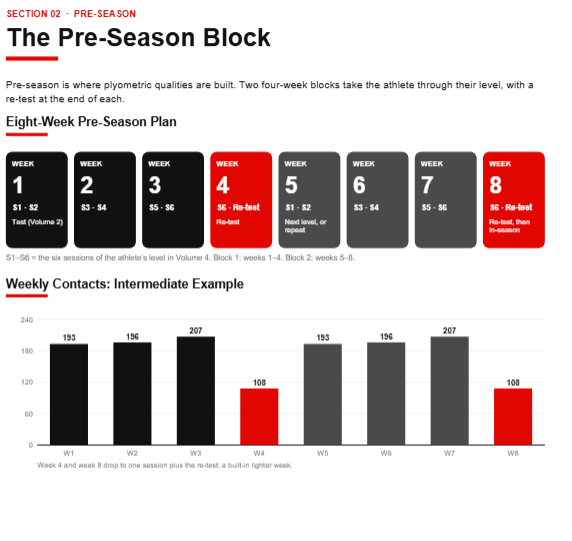
pre-season blocks
one-match and two-match weeks
the order of training on a hard day
a green/amber/red system for adjusting sessions on the day
tapering for a key match
managing young athletes who play for several teams
Strength and conditioning coaches who want a complete, ready-to-use plyometric system
GAA, soccer, rugby and athletics coaches who want faster, more powerful players without the guesswork
Club and academy coaches working with youth players, with dedicated youth sessions and age guidelines
Personal trainers and PE teachers who want to coach jumping and landing safely and properly
Serious athletes who want to follow a structured programme on their own
✔ Landing first, always. No athlete jumps until they can land. Every level has clear entry criteria.
✔ Every contact counted. Each session is checked against the safe contact range for its level. Advanced sessions never go over 30 depth contacts.
✔ Testing that chooses the programme. Four simple tests tell you what to train, so you never have to guess.
✔ Youth-specific. Dedicated sessions for under-18s, adjusted by age, with no depth jumps and no added weight.
✔ Built for the real season. Planning around matches, congested fixtures and players who are tired, sore or just back.
✔ Print-ready. Results sheets, session records and a season planner, ready to use with your squad.
No results match your search. Try removing a few filters.
